

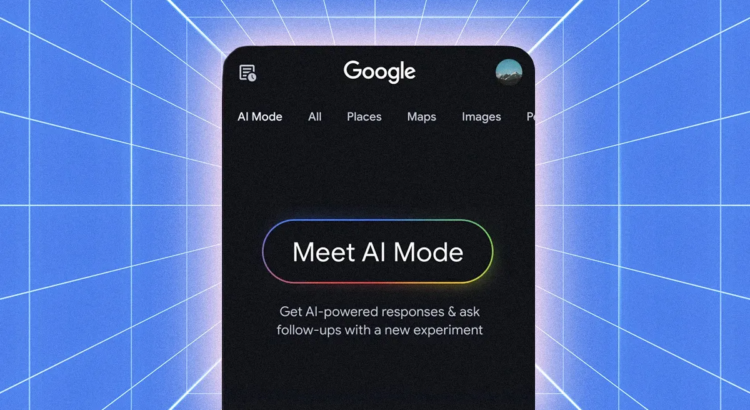
Surviving the SEO landscape in 2026 is like a battle to be cited but being found. The era that started with keyword stuffing has now stormed into the age of Answer Engine Optimisation (AEO) and Generative Engine Optimisation (GEO).
Many experts think that AI will turn your brand into a robotic, soul-less copy of every next blog found on the internet. But this is not the truth. AI can be your best tool or a partner in success to amplify the unique voice of your brand, provided you know how to use it smartly. Imitation will do good for nothing, but smart support can bring the change that you yearn for many years.
So, here is a comprehensive guide to let you master AI in SEO in 2026 and keep your brand voice loud.
The 2026 Shift: From Clicks to Citations
In 2026, Google’s AI overviews, earlier called SGE (Search Generative Experience), continue to dominate the search results.
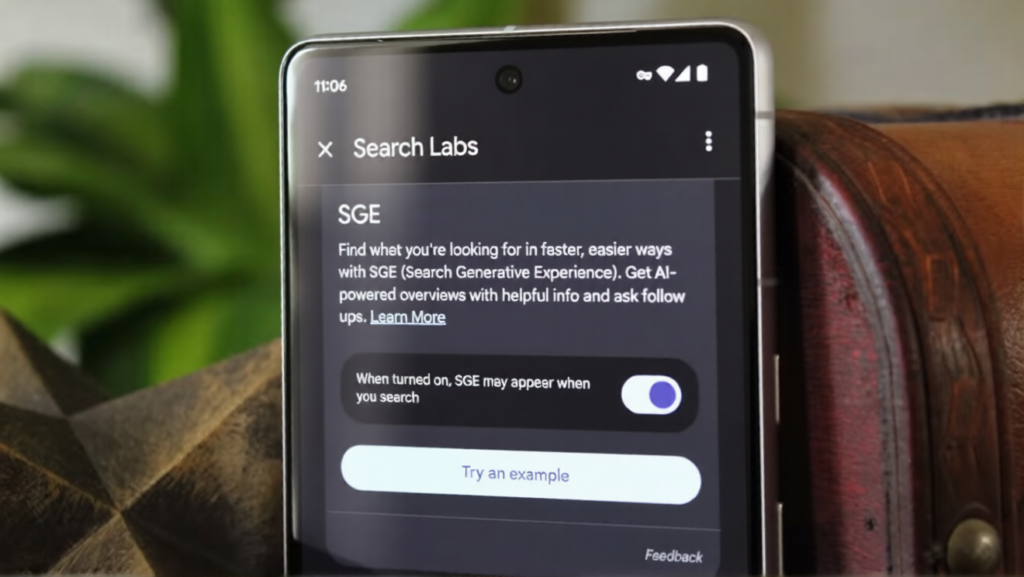
These AI search results completely end the search for many visitors after showing the AI summaries where they find the right answer. So, why would they scroll down to see more results if the intended result is right there on the top? Of course, they won’t see further.
The New Strategy
The contest for roping to rank #1 is over. Now, brands and companies want the claim a space in answers the AI uses. It is right at the top of the search results or in the right pane. This is what the modern SEO strategy for AI overview is. So, when an AI summary cites your brand, it’s a seal of credibility or high authority. With this presence, they receive higher quality conversion traffic that is way more than traditional window shoppers.
Using AI for SEO Without Losing Your Soul
The biggest mistake SEO experts or any company does is to treat AI like a vending machine where they put in a prompt and get a finished blog or article. This is a big misconception. In 2026, search engine bots and even people can recognize spun articles or blogs from AI.
Now, the question is how to use AI smartly to overcome the problem of “factory grade” content. Here come some proven ways.
Step 1: Feed the AI Your “Brand DNA”
Before you even ask an AI to write a single word, ensure you know what to do. Define your brand’s voice beforehand. Instead of directing it to answer professionally, set up a tone for the AI to use your brand’s voice manual.
- The Vibe: Define the profile of your business or corporate entity, as if you run a media house, a content creator, a BPO, or whatever.
- The No-Go Zone: Like negative keywords, list words that you don’t want to follow. For example, your company provides compliance consulting, but not the services. You can list words like “compliance services” to avoid them in the content.
- The Examples: Feed some examples that are human-written. With them, AI analyses the tone, sentence length, and catches the rhythm of these examples.
Step 2: Use AI for the “Skeleton,” Not the “Skin”
Instead of brainstorming alone, use AI for the heavy lifting of SEO. Let’s say, keyword clustering and competitor gap analysis or even strategizing YouTube growth. Here are some tips to follow:
- Research: Ask AI to share the gap in the competitors’ marketing strategy. It’s something that they are not saying. It is the “information gain” for you to leverage.
- Outlining: Allow Google Gemini or any other platform to outline the strategy based on Google AI overviews or AI summaries.
- Drafting: When it comes to drafting the content, use it for the first 60%.
- The Human Finish: For being credible, you must include Google E-E-A-T (Experience, Expertise, Authoritativeness, Trustworthiness). This is where the human-in-the-loop leads by providing a personal anecdote, a controversial take, or a specific case study with genuine statistics.
SEO Strategy for AI Overview: The Technical Playbook
Now comes the SEO strategy for AI summaries or overviews. To get featured in those coveted AI snapshots, ensure your content is both machine readable and human lovable.
| Tactic | Why it Matters in 2026 |
| Citable Answer Blocks | To cover any crucial topic in the body, give a direct answer in 40-60 words in the beginning. AI loves this drafting. |
| Schema Markup | Integrate the right type of schema to feed AI exactly what you serve or present. |
| Topical Authority | Instead of covering a topic once, cover complementary topics as a cluster of 5 to 10 blogs or articles to prove your expertise in the niche. |
| Natural Language Headings | Integrate real questions that people ask like how much an online ad for clothing costs in 2026. Use them as H2 subtitles. |
Current Trends: Beyond the Search Bar
The year 2026 brings a lot of surprising changes to SEO. It has expanded beyond Google, as people are searching for answers on YouTube, inside ChatGPT, Perplexity, or Claude. Even for exact war locations, governments try to sign deals with a few of them. This is the power of AI searches.
The “Entity” Revolution
Search engines no longer see keywords as phrases or strings of text. They treat them as real-world concepts. So, if you want to win the game, your company or brand must be presented as a recognised entity. It means your brand should follow these:
- Consistency: Sing the same tune on every platform, meaning your brand message or profile should be similar on LinkedIn, blog, or podcast.
- Mentions: Find your brand mentions, which are the posts talking about your brand without a link. It can help your SEO because AI bots “read” the experts’ views.
Zero-Click Optimization
As it is alarming that nearly 60% of searches now result in zero clicks. It means that AI answers provide satisfactory results in the overview section, which prevents users from scrolling further. This trend reduces clicks, which can be overcome to a certain extent via brand recalls. Optimize your content by including your brand name along with your most valuable insights. Even if they don’t click, this idea will let them remember who gave them the answer.
The “Human-First” Guardrail
Certainly, User-Generated Content or UGC has its own value. It dominates because the world has AI text floating all over the internet. And people want the real human experience in the answer, which AI text does not provide.
Pro Tip: Simply put, AI no longer remains on blog submission, but to analyze your customer reviews and forum discussions. Integrating real human questions indeed fuels an SEO strategy. So next time when you write anything, answer according to a real person’s specific question, though it sounds weird. It will help you to lead the competition in AI searches.
Conclusion
The use of AI for SEO strategy-making has completely shifted the search results from human-driven to bot-discovered. Since the competition is cutthroat, it is necessary to audit your voice that must not sound like everyone else who uses AI for content creation. Implement GEO, which means defining answers in the first 40-60 words about a topic. Ensure that you are writing for a human being who wants topics to be clear, and insightful. Don’t forget to add original photos, videos, and personal case studies to engage people via real-human experiences. So, AI in SEO is not about letting the bots’ rule, but amplify the uniqueness of the brand.