
Do you still believe that the efficiency of a call centre depends on the volume of calls it handles? This is an incomplete truth. The hyper-competitive landscape emphasizes call centres to scale the volume of calls along with the intelligence, speed, and accuracy of those interactions. These are all the components of maximum response rates that interactive voice response (IVR) can simply help you achieve.
What is an IVR System?
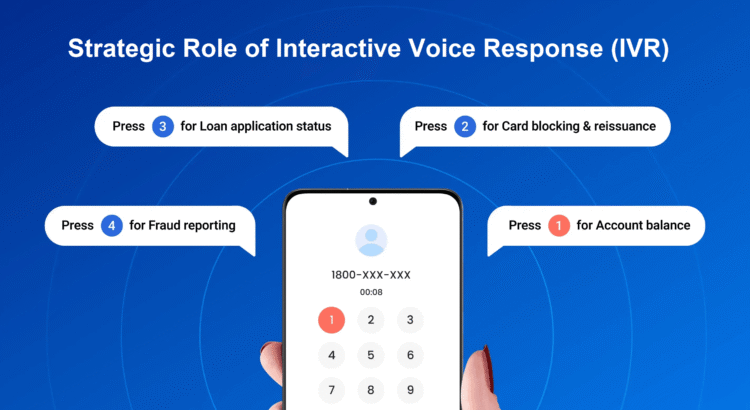
An IVR system has evolved to ensure seamless handling of high-volume calls with efficiency. Simply put, this system enables companies to define a professional approach for excellent customer service. At its core, the IVR represents a digital workflow wherein a calling agent strategically applies filters and uses it as a digital receptionist to provide several key operational and financial advantages. By automatically routing calls, agent’s workload gets reduced while customer support simultaneously enhances.
The Mechanism of Workload Reduction
Technically, a high-volume call centre faces repetitive, low-value inquiries that human resources must attend. Professionally, it is a must-do exercise to avoid spending significant portions of the shift timing while handling enquiries, such as how to reset passwords, how to pay online, or whatever your domain is. These are more administrative than consultative.
Let’s explain how the IVR system works. It acts as preset guidelines that help customers resolve their simple, routine issues without human intelligence. Its automatic capabilities, if implemented professionally, can manage up to 60% of inbound or incoming calls. This is how it prevents human agent’s burnout without costing much.
The machine automatically handles a massive volume of basic queries, whose cost is 30% to 50% lower than hiring human call agents (source).
Calls are only forwarded when the query is technically complex, uncommon, and needs emotional intelligence and nuanced problem-solving skills to add value.
Driving First Call Resolution (FCR)
FCR stands for “first call resolution”. It is considered the topmost standard for excellent customer experience. When a customer reaches the right person on the very first attempt, the probability of repeat calls significantly sinks. Furthermore, the dissatisfaction rate, which increases when the customer is tossed between departments for the right answer, comes down.
In many cases, the IVR system contributes to higher FCR rates because of these two critical functions:
- Intelligent Routing: Modern IVR systems are better than static call menus because they use a professional database to carry out professional skill-based routing. As the caller calls, the system determines what a specific query is. Once understood, it directs each one to the competent agent or team aligned to handle that exact issue. It minimises the frequency of transferred calls and aligns the caller with the agent who is competent to resolve it according to the domain on the spot.
- Contextual Hand-off: An IVR connected with Customer Relationship Management (CRM) databases navigates complexity by automatically authenticating a caller and pulling his history before one even reaches a calling agent. On receiving the call, the agent’s screen already starts showing the profile, recent history, and likely cause for a customer’s calling. These popups help reduce response time, and the cyclic queries by agents end. The repeated queries often annoy customers who feel dissatisfied. When the agent has the entire data of the customer’s previous purchases, let’s say, the conversation begins with confidence, and the resolution time automatically reduces. It makes interaction valuable.
Integration with Call Centre Outsourcing
Organizations opting for call centre outsourcing services must think about the role of IVR, as it has become even more critical. Organizations, like Multitech IT, manage a long list of clients, which means they have massive experience in handling enquiries for multiple companies, businesses, or complex product lines. And the integration of IVR makes high-volume calls at scale achievable.
Outsourcing companies leverage this platform for the following purposes:
- Maintain Brand Consistency: Auto-generated answers ensure every customer receives greetings in a polite tone, and the same level of navigation experience, no matter whether the call is answered by an in-house or outsourced representative.
- Optimise Phone Answering Workflow: Outsourced companies closely monitor and evaluate minute-by-minute phone answering for scaling projects. IVR provides insightful data needed to track call trends and assess peak call times. The insights guide decisions on when to scale staffing levels so customer care services can remain smooth when there is a sudden surge in call volumes.
- Seamless Escalation: A business or a company outsources customer support when it needs to switch from automated self-service to a live human. Simply put, this journey must be frictionless. Advanced IVR systems live up to this expectation, carrying over all the caller’s background data so the agent can provide personalised answers with a high-touch experience. This strategy masks the complexity of the underlying structure.
The Path Forward: AI and Natural Language Processing

Conversational AI is now in. It is trending. And this is the future of IVR technology. At present, traditional calling menus are replaced by natural language understanding. In simple words, customers can communicate and share what their concern is instead of navigating through a series of steps.
The conversational AI works to meet desired results with high accuracy. Simultaneously, humans do not need to put effort into handling and answering standard queries. Fortunately, the inception of AI has made it a piece of cake, shifting the workload entirely towards humans when the case requires “exceptional handling” of logical queries.
This new technological transformation drastically reduces the cost-per-contact while enhancing the role of the call centre agent. So, the latest, smart technology helps calling agents deliver specialized solutions that fully satisfy customers.
Conclusion
In a nutshell, IVR is way beyond the phone menu. Organizations often outsource call centre services to experts for achieving excellent customer experience, which is indeed a fundamental pillar for customer engagement. This is why even Google considers customer reviews a significant signal for web visibility. So, this is just an example, proving the worth of an excellent experience.
Outsourcing companies automate repetitive call answering after meticulously segmenting the basic queries. They align humans to answer in the case of complex queries. This blend of automation and human effort facilitates higher first call resolution through smarter routing techniques. This is where IVR systems prove a crucial component in achieving high response rates. So, global businesses leveraging their IVR systems can effortlessly filter, route, and even address customers’ queries.